
Fighting
45 games in total. Page 1 of 2


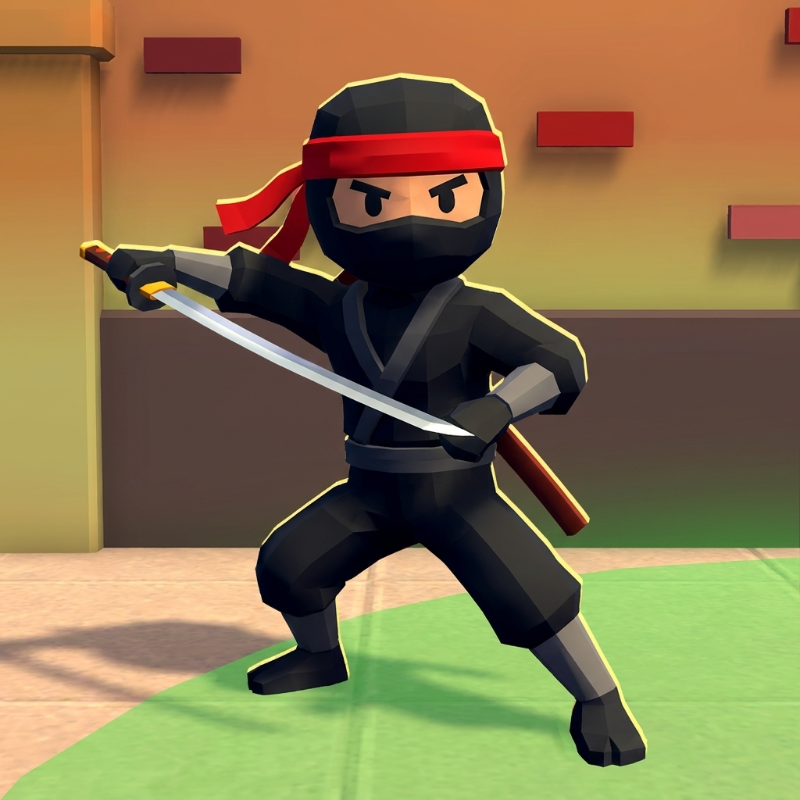
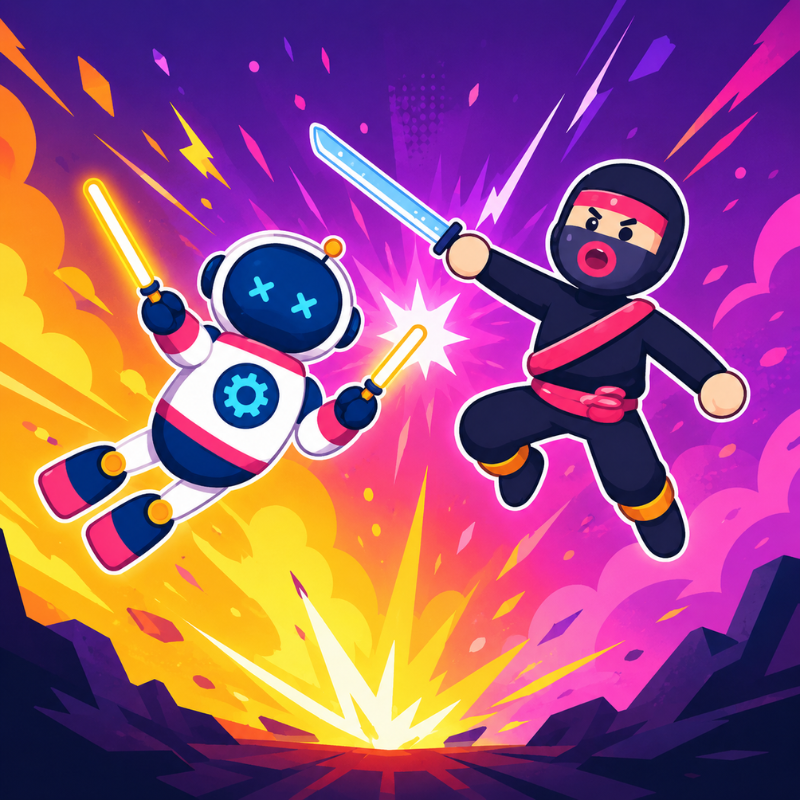







What Are Browser Fighting Games?
Fighting games are one-on-one combat games. Two characters meet in a closed arena, each with a health bar and a round clock, and the winner is whoever empties the other bar before the time runs out. The genre began in arcades, and that arcade shape is what fits a browser best: short rounds, a small move set, a visible score.
A browser fighting game is the same idea reduced to what a keyboard and a page can carry. There is no install, no patch and no lobby. The roster is smaller than a retail release, the animation is drawn in two dimensions, and a round often lasts under a minute. None of that makes the games shallow. It makes them usable in the five minutes you actually have.
Everything on this page is free, full screen, and needs no download or account.
The Main Types of Fighting Games on This Site
Not every game filed under fighting plays the same way. Four shapes cover almost all of them.
One-on-one versus fighters
The default shape. You pick a character, the computer picks one, and the round is a straight duel: step in, poke with a fast attack, punish a missed move, back off. These games are built for a single player, with a difficulty setting standing in for a real opponent. The appeal is the same as it has always been — reading a pattern and answering it.
Two-player fighting games on one keyboard
The same duel, but the second controller is the other half of the keyboard. One player uses W, A, S, D and the keys around them; the other uses the arrow keys and a couple of buttons. This is the version people remember from school computers, and it is why the genre survives on sites like this one. Nothing needs configuring, and both players are in the same room, so there is no lag to argue about. The two-player games page collects the whole cross-genre selection.
Arcade and retro fighting games
Arcade fighters keep the coin-op rhythm: a short ladder of opponents, a timer, a continue screen. Retro entries reproduce the look of early cabinets — chunky sprites, limited colors, no scrolling camera. They are not history pieces. They are small, fast games that happen to look old.
Platform fighters
A platform fighter puts the duel on a stage with floors at different heights and lets you knock an opponent off the edge rather than only draining a bar. Movement matters more and the camera pulls back to show the whole stage. These are usually the friendliest browser fighters for a beginner, because jumping and running are easier to learn than a block string.
Fighting Game Basics: Moves, Blocks and Combos
Every fighting game runs on the same three or four verbs. Learn them once and most of the games here become readable.
Strike, block, throw
A strike is your attack. A block reduces or stops it. A throw beats a block. That triangle is the whole foundation: if you only attack, a patient opponent blocks and answers; if you only block, a throw opens you up. The games differ in timing and in how much damage each option carries, not in the logic.
Special moves and inputs
Special moves are the attacks that are not just a punch. In a browser game they are usually bound to one key or a two-key combination rather than a quarter-circle motion, because a keyboard is not a joystick. A projectile, a rising uppercut, a charging rush — each has a startup, an active window and a recovery. Learning one reliable special and when to use it is worth more than learning five you cannot land.
Combos and cancel windows
A combo is two or more hits that connect without the opponent recovering in between. The concept that matters is the cancel window: the brief moment after one attack lands during which the next input is accepted. Miss it and the second hit does not come out. Combos are rhythm, not speed. Press too early and nothing happens; press on the beat and the sequence runs.
Meter, rounds and time
Most fighters give each character a meter that fills as they deal and take damage. When it is full, one heavy move becomes available, usually the most damaging thing in the game. Rounds are best-of-three by default. The clock is a third opponent: it forces action and turns a careful lead into a real advantage.
Why Fighting Games Work So Well for Two Players
Fighting is one of the few genres that is genuinely better with a second person in the room, and the reasons are structural.
- The screen is already split by the game. One character is on the left, one on the right. Nobody needs a second view.
- No hidden information. Both players see the same board, so winning is not about knowing something the other does not.
- Rounds are short. Losing is cheap and a rematch is immediate.
- Skill shows up fast. Two players of equal experience separate within three rounds, which makes the game feel fair without a ranking system.
- It is a conversation. You find a habit in your opponent and punish it, and they adapt.
The practical limit is the keyboard. Two players sharing one get cramped on a laptop, and ghosting — the keyboard dropping a simultaneous keypress — becomes real. Play on a desktop keyboard where you can, or take turns on a phone.
Browser Fighting Games vs Console Fighters
The two are not the same product, and it is worth being direct about the differences rather than pretending the browser version is a port.
- Nothing installs. A console fighter is a purchase and a gigabyte download. A browser fighter is a page. The console game is a planned evening; the browser game is the ten minutes before dinner.
- Two dimensions, not three. Almost every browser fighter is 2D, which is also why they load quickly and run on a cheap laptop or a phone.
- Small move sets. A retail fighter ships fifteen to thirty moves per character. A browser fighter ships four to eight. That makes them easy to start and quick to exhaust; the depth is in timing rather than in move count.
- No ranked ladder. There is no matchmaking, no season and no patch notes. You play the computer or the person next to you.
- Keyboard, not gamepad. Most browser fighters are built around keys, which is why they simplify special-move inputs in the first place.
None of this is a criticism. The genre's best idea — two characters, two health bars, one honest duel — survives the reduction intact. What you lose in production you get back in access.
How to Choose a Fighting Game Here
The right pick depends on who you are playing with and how long you have.
- Playing alone: start with a versus fighter on the easier difficulty. Learn one combo and one special before touching the settings.
- Playing with a friend: pick a two-player fighter and agree on a control scheme before the first round. Half of all arguments about these games are about who got the arrow keys.
- Playing with a child: choose a platform fighter or a cartoon-styled game. Knocking someone off a stage reads as funny rather than violent, and the controls are simpler.
- Wanting the arcade feeling: take a retro or arcade entry. The ladder of opponents and the visible timer do most of the work.
- Waiting for something: any game on the page. The load time is the point.
The arcade games page covers the coin-op feel without the duel; puzzle games is the opposite end of the same five minutes.
Fighting Games and the Rest of the Site
Fighting sits beside a few genres that are easy to confuse with it.
- Fighting vs beat 'em ups. A beat 'em up sends players through a scrolling level against many weak enemies. A fighter is a fixed arena against one opponent. The names overlap; the games do not.
- Fighting vs sports games. A boxing or wrestling game may look like a fighter, but the rules come from the sport. Real fighters have health bars and rounds and no referee.
- Fighting vs many-player brawlers. Those are last-one-standing contests with dozens of fighters. A fighter is one against one and always has been.
Many players arrive searching for fighting games in the style of the big console series — games like Street Fighter or Mortal Kombat. This page does not carry those titles, and nothing here is a port of them. The games here are small original fighters built on the same rules: two characters, a health bar, a round clock. If that is the shape you want, you are in the right place.
Fighting FAQ
Are these fighting games free to play?
Yes. Every fighting game on this page is free, runs in the browser and needs no download, install or account. The site is supported by advertising.
Can two people play a fighting game on one keyboard?
Yes. Most two-player fighters here split the keyboard: one player uses WASD and nearby keys, the other uses the arrow keys. Check the controls screen before the first round, because schemes vary by title.
Do I need a gamepad to play browser fighting games?
No. These games are built for a keyboard, and most also work with touch on a phone or tablet. Gamepads are usually not supported.
What is the difference between a fighting game and a beat 'em up?
A fighter is one against one in a fixed arena, with health bars and rounds. A beat 'em up scrolls through a level against groups of weaker enemies.
Are browser fighting games as deep as console fighters?
No, and they do not try to be. Characters carry four to eight moves instead of thirty, and there is no ranked ladder. The depth is in timing and in reading your opponent.
What is a platform fighter?
A fighting game played on a stage with several floors, where you can win by knocking the opponent off the edge as well as by draining their health bar.
Why do my special moves not come out?
Usually timing or input order. Check the controls for the exact key combination, then practice it in a slow round. Many specials are one key plus a direction, not a motion.
Can I play these fighting games on a phone?
Yes. Most of the games here run on a phone in landscape, with on-screen buttons replacing the keyboard. Two-player mode on a single phone is cramped; one player against the computer works well.